............MASTER PLAYLIST: ALL CHANNEL VIDEOS PLAYLIST

Hello an welcome to my blog! This is just a quick share of my master playlist for my main Youtube channel HEIRLOOM REVIEWS. I made this master playlist as a suggestion and a request from a viewer on Youtube. They said it would be nice if all my videos could play on auto play so i said i would make a master play list! All you have to do is hit PLAY an the playlist will run all the videos! I like to run a playlist when im going to sleep, it helps me sleep an empties my mind while i doze off into sleep. Most of the time the playlist are long done playing but with this playlist you can rest assure it will play long into the morning hours!! As of 12/26/2016 there is 441 videos in the play list. By the end of 2017 there should be over 1000! That's a lot of videos!! Down below i will include links to the most popular videos as well as some other stuff. Any who hope you enjoy an i will see you on the next one!! : )

P.S. feel free to use or embed the links into your web site! comment below if you would like me to make a custom playlist for your web site.


OTHER CHANNELS TO SUBSCRIBE TOO:
Peppers an Pods Reviewed Channel:
https://www.youtube.com/c/PeppersanPodsReviewed
⟹ Heirloom Reviews LIVE:
https://www.youtube.com/channel/UCz_y6cWarmwweK7jE2s8lRw
⟹ patreon:
https://www.patreon.com/HeirloomReviews
⟹ minds:
https://www.minds.com/HeirloomReviews


⟹ AJI CHARAPITA, PI 260498 - Pepper Is this worth $25,000 a kilo ? Capsicum frutescens

⟹  Brown Bhutlah Pepper, Capsicum chinense 4 SKULLS RATING ☠☠☠☠ PLANT REVIEW :
https://youtu.be/9_Q8gr1syjU

⟹  Pepper plants UPDATE 9/3/2016
https://www.youtube.com/watch?v=DbwgbiEoQKM&list=PLER_IbFUeAtn2P-QdEIbzp2udbhVbQtT8

⟹  CHARAPITA (PI 260498) - Pepper THEY TASTE LIKE IVORY SOAP!!
https://youtu.be/2A9S4Jshptk

⟹ ⚜ Dulce Marrón ⚜  Pepper - A PEPPER LOVERS CREATION ⚜
https://youtu.be/Shorc7ZzAuE

⟹ PURPLE CAYENNE, Capsicum annuum A QUICK LOOK:
https://youtu.be/DA0Gr0980TI

⟹  WORMWOOD ✴️ artemisia absinthium 🌿 BE CAREFUL
https://youtu.be/b50RThM2ixs

⟹ 🌿 Artemisia absinthium aka wormwood flowers an update!!🌿
https://youtu.be/__Ec7kmylcQ

⟹  LAST GREENHOUSE TOUR OF 2016 : Pepper Plants, Tomatoes, an more!!
https://youtu.be/NWeJTWJmh08

⟹ PLAYLIST ⚜ HERBS, FLOWERS, MEDICINAL PLANTS, WILD WEEDS ⚜
https://www.youtube.com/watch?v=b50RThM2ixs&list=PLER_IbFUeAtlVdfvK6RnIJUevr1sgfGRP

⟹ Danish Flag Afghan Poppy:
https://youtu.be/XwU1v_1RWN0

⟹ Paradicsom Alaku Sarga Szentes - Pepper - The pumpkin pepper !!
https://youtu.be/ClacIe8llk8

⟹  Brown Bhutlah - Pepper YOU COULD DIE IF YOU EAT THIS!! :

⟹  ☠ ☠ CAROLINA REAPER ☠ AKA ☠ HP22BNH7 PEPPER ☠ ☠

⟹  Bell of Göllü - Pepper   SHEEP NOSE TYPE SWEET!!

⟹ ☠☠ Trinidad Scorpion ☠ Pepper ☠ ❕DANGER❕ ☠☠

⟹ Aji Peanut - Pepper GREAT FOR PICKLING!! :


..................PLANTED FISH TANKS: THE WALSTAD METHOD

MY PLANTED FISH TANKS
BY HEIRLOOM REVIEWS
PHOTO BY HEIRLOOM REVIEWS
75 GALLON DIRTED TANK
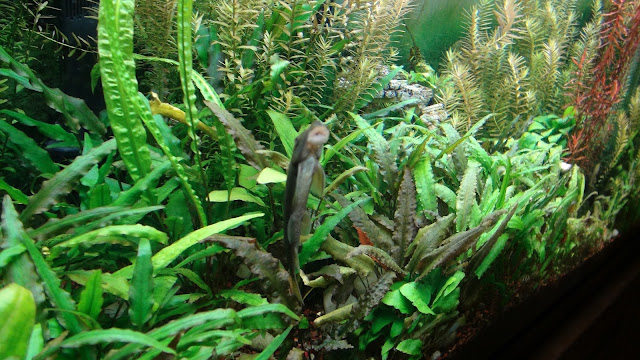
I have been keeping fish tanks for over 20 years. about 8 years ago (from 2016) i read the book, walstad method book: Ecology of the Planted Aquarium and was intrigued that a fish tank can actually become a self sustaining ecosystem! So i began setting up my tanks based on what i have read an the image above (75 gallon dirted tank) is the first tank i set up using the walstad method. For the first 2 years it had its challenges, algae, fish death, plant death, water fouling, ETC... But after about 2 years all these problems became less an less as time moved on.
PHOTO BY HEIRLOOM REVIEWS
Dwarf sag 75 Gal
Now after 8 years the tank is totally self sustaining with almost no maintenance! I only clean the filters 2 or 3 times a year. i haven't changed the water in over 4 years, i only add water. I do dose the tank once a week during the winter but not during the summer time due to being busy with gardening and what not. So i started on another 75 gallon tanks with a slightly different set up as far as filters an lighting go's but everything else was the same. Well that tank has failed along with 2 other 55 gallon tanks! all the other tanks never made it just the first 75 gallon tank. Some how i got the first tank right an should of followed it exactly with out any deviations, perhaps maybe the other tanks would have done just as good. In this video here ⟹ PLANTED TANK : My 75 gallon Walstad, dirted fish tank, 2016 i show my 75 gallon dirted fish tank.
And in this video ⟹ PLANTED TANK : My 55 gallon Walstad, dirted fish tank, 2016 i show a 55 gallon dirted fish tank i recently set up for another shot at the walstad method. I i will update this blog as i make changes as well as the dosing an ferts i use during the winter months. That's all for now an i will leave you with a music video of the 75 gallon dirted fish tank! : )
PHOTO BY HEIRLOOM REVIEWS
75 GALLON PLANTED FISH TANK 720P : WARNING AMBIENT RELAXING MUSIC

BUY PLANTS HERE:
walstad method book: Ecology of the Planted Aquarium:
25+ stems / 6 species Live Aquarium Plants Package:
Java Moss:
Staurogyne Repens:
Luffy Pellia:

OTHER VIDEOS TO WATCH:
⟹ PLANTED TANK, DOSING My 75 gallon Walstad, dirted fish tank, 2016 #WALSTAD:https://youtu.be/PUUkx99Ufeo

⟹ 75 GALLON PLANTED FISH TANK 720P : WARNING AMBIENT RELAXING MUSIC:
https://youtu.be/XEXQimyhs6M

⟹ THE POND : Feeding the Goldfish an FROG ! PT 1 :
https://www.youtube.com/watch?v=IRXEnnGm8PU&index=1&list=PLER_IbFUeAtn7mTmw8lAqcMSoWLB5R0Rp

⟹  👆 FLOWERS IN THE POND!! 👆 :
https://www.youtube.com/watch?v=-fGGqC9eF-o&index=2&list=PLER_IbFUeAtn7mTmw8lAqcMSoWLB5R0Rp

⟹ A FIGHT FOR SUPREMACY 🐸 FROGS! :
https://www.youtube.com/watch?v=DWDOb_WHICU&list=PLER_IbFUeAtn7mTmw8lAqcMSoWLB5R0Rp&index=3

⟹ The greenhouse TOAD reigns supreme! look at the belly on this little  guy!!
https://www.youtube.com/watch?v=qejkPG8Iop0&list=PLER_IbFUeAtms_87nsr6CGVsgKhJM_KS-&index=2

⟹ Red tailed Hawk - listen to its scream!! :
https://www.youtube.com/watch?v=46Ei7I57TXo&index=1&list=PLER_IbFUeAtms_87nsr6CGVsgKhJM_KS-
PHOTO BY HEIRLOOM REVIEWS
55 gallon dirted tank
OTHER CHANNELS TO SUBSCRIBE TOO:
Peppers an Pods Reviewed Channel:
https://www.youtube.com/c/PeppersanPodsReviewed
What is the Walstad Method?
This method of setting up an aquarium tank was made popular by Diana Walstad, author of the book 'ECOLOGY of the PLANTED AQUARIUM - A Practical Manual and Scientific Treatise for the Home Aquarist'. Basically it's a natural planted tank with a substrate containing a soil underlayer.

Principles
Provide an ecosystem where plants and fish balance each other's needs. The soil underlayer ensures that plants grow well enough to out-compete algae and recycle fish waste and toxins (e.g., ammonia, nitrite, etc.). Without soil, plants don't grow well enough to do "their job"

Principle steps
     1 inch layer of inexpensive, generic potting soil (or "top soil") available from any garden centres or various home improvement stores. (John Innes number 3 recipe is ideal). Avoid soils containing chemical fertilizers (sulfates and nitrates will be converted to toxic H2S and nitrite after soil is submerged). Phosphate and calcium fertilizers (i.e., a little bone meal mixed with soil) may be beneficial. Get non-sterile 'aquatic pond soil' if it's available. Soil based compost - John Innes #3

    1 inch of medium fine gravel (or very shallow layer of sand) to cover the soil layer (the soil bacteria need oxygen, so don't smother the soil layer with rocks, driftwood, etc)

    If you have soft-water, you can mix in a calcium source (lime, coral gravel, shells, bone meal, etc) with the soil to make sure plants get enough calcium, GH for their initial set-up.

    For tank set-up, start out with many species of fast-growing plants (you want to find the ones that adapt best to your tank's conditions). Examples: Hygrophila corymbosa, Shinnersia riv., Rotala rotundifolia, Ludwigia repens, Limnophila sessiliflora, Hornwort, Riccia, etc.

PHOTO BY HEIRLOOM REVIEWS

NOTE: All photo's and video's are the sole property of Heirloom Reviews and are copyright protected an TM. Permission is needed to use any photo's or video's from any blogs by Heirloom Reviews...


...........RAMBUTAN - Planting from seeds to trees video series

Growing Rambutan from seed
BY HEIRLOOM REVIEWS
PHOTO BY HEIRLOOM REVIEWS
RAMBUTAN FRUIT
I am planting the seeds from the RAMBUTAN Nephelium lappaceum i brought from WALMART, in this video series! I Will Update the progress as changes occur. next youtube Video, will be when they sprout, but if no sprouts, i will NOT continue making video series about this. Not sure if i should re pot through out the winter but i dont know at this point if they will even sprout? anyways i will log the temperature, humidity, amount of light an how long i leave the light on if i use artificial lighting, and watering, i dont think i will need any kind of fertilizer but if i do use any kind of ferts it will be organic, ORMI, or other like Epsom salt, enjoy!! UPDATE: See latest update below!!

VIDEO SERIES:
WALMART : RAMBUTAN - FRUIT REVIEW!!! Sep 22, 2016

WALMART : RAMBUTAN - Planting the seeds!!! PT 1 Sep 27, 2016

WALMART : RAMBUTAN - Seeds sprouted!!! PT 2 Oct 6, 2016

WALMART : RAMBUTAN - Getting roots!!! PT 3 Dec 2, 2016

WALMART : RAMBUTAN - Plant growing!!! PT 4 Dec 28, 2016  latest update

OTHER CHANNELS TO SUBSCRIBE TOO:
PEPPERS AN PODS CHANNEL: POD REVIEWS AND TASTE TEST
https://www.youtube.com/channel/UCA0u0AcWmi9HZQ98CK2RMWg

Heirloom Reviews LIVE: LIVE STREAMS AN GOOGLE HANGOUTS
https://www.youtube.com/channel/UCz_y6cWarmwweK7jE2s8lRw

PATREON: PLEASE DONATE!
https://www.patreon.com/HeirloomReviews

MINDS: GREAT WEB SITE
https://www.minds.com/HeirloomReviews

HEIRLOOM REVIEWS WEBSITE: SUBSCRIBE!
https://heirloomreviews.blogspot.com/
PHOTO BY HEIRLOOM REVIEWS
RAMBUTAN FRUIT
The rambutan (/ræmˈbuːtən/; taxonomic name: Nephelium lappaceum) is a medium-sized tropical tree in the family Sapindaceae. The name also refers to the edible fruit produced by this tree. The rambutan is native to the Malay-Indonesian region, and other regions of tropical Southeast Asia. It is closely related to several other edible tropical fruits including the lychee, longan, and mamoncillo.
Etymology

The name 'rambutan' is derived from the Malay-Indonesian languages word for rambut or "hair", a reference to the numerous hairy protuberances of the fruit, together with the noun-building suffix -an. In Vietnam, it is called chôm chôm (meaning "messy hair") due to the spines covering the fruit's skin.
Rambutan is native to tropical Southeast Asia and commonly grown throughout Indonesia, Malaysia, Thailand, Vietnam and the Philippines. It has spread from there to various parts of Asia, Africa, Oceania and Central America. The widest variety of cultivars, wild and cultivated, are found in Malaysia.

Around the 13th to 15th centuries, Arab traders that played a major role in Indian Ocean trade introduced rambutan into Zanzibar and Pemba of East Africa. There are limited rambutan plantings in some parts of India. In the 19th century, the Dutch introduced rambutan from their colony in Southeast Asia and Suriname in South America. Subsequently the plant spread to tropical Americas, planted in the coastal lowlands of Colombia, Ecuador, Honduras, Costa Rica, Trinidad and Cuba. In 1912, rambutan was introduced to the Philippines from Indonesia. Further introductions were made in 1920 (from Indonesia) and 1930 (from Malaya), but until the 1950s its distribution was limited. There was an attempt to introduce rambutan to the United States, with seeds imported from Java in 1906, but the species proved to be unsuccessful, except in Puerto Rico.
It is an evergreen tree growing to a height of 12–20 m. The leaves are alternate, 10–30 cm long, pinnate, with three to 11 leaflets, each leaflet 5–15 cm wide and 3–10 cm broad, with an entire margin. The flowers are small, 2.5–5 mm, apetalous, discoidal, and borne in erect terminal panicles 15–30 cm wide.

Rambutan trees can be male (producing only staminate flowers and, hence, produce no fruit), female (producing flowers that are only functionally female), or hermaphroditic (producing flowers that are female with a small percentage of male flowers).

The fruit is a round to oval single-seeded berry, 3–6 cm (rarely to 8 cm) long and 3–4 cm broad, borne in a loose pendant cluster of 10–20 together. The leathery skin is reddish (rarely orange or yellow), and covered with fleshy pliable spines, hence the name, which means 'hairs'. The fruit flesh, which is actually the aril, is translucent, whitish or very pale pink, with a sweet, mildly acidic flavor very reminiscent of grapes.

The single seed is glossy brown, 1–1.3 cm, with a white basal scar. Soft and containing equal portions of saturated and unsaturated fats, the seeds may be cooked and eaten. The peeled fruits can be eaten raw, or cooked and eaten: first, the grape-like fleshy aril, then the nutty seed, with no waste.
Aromatic rambutan flowers are highly attractive to many insects, especially bees. Flies (Diptera), bees (Hymenoptera), and ants (Solenopsis) are the main pollinators. Among the Diptera, Lucilia spp. are abundant, and among the Hymenoptera, honey bees (Apis dorsata and A. cerana) and the stingless bee genus Trigona are the major visitors.

NOTE: All photo's and video's are the sole property of Heirloom Reviews and are copyright protected an TM. Permission is needed to use any photo's or video's from any blogs by Heirloom Reviews...

..................................$25,000 pepper AJI CHARAPITA

AJI CHARAPITA, PI 260498 - Is this Pepper worth $25,000 a kilo?
BY HEIRLOOM REVIEWS
PHOTO BY HEIRLOOM REVIEWS
AJI CHARAPITA
 OK so, a viewer from a past youtube video on the CHARAPITA brought to my attention that there is an article on the pepper stating that this pepper is worth $25,000 a kilo!! lol ok so i am making this youtube video to see if anyone else out there heard anything about this?? and if so PLEASE provide a link to the web page where you are getting the information! if this is a rumor i would like to nip it in the bud before some may try an price gouge this pepper an make it unavailable to those that may want to grow it! link to the article is below. thanks for watching!! #heirloomreview #charapita #aji #pepperz

⟹ AJI CHARAPITA, PI 260498 - Pepper Is this worth $25,000 a kilo ? Capsicum frutescens
https://youtu.be/fwbu2E5TnGA

⟹ $25,000 per Kilo charapita pepper
http://www.odditycentral.com/news/worlds-most-expensive-chili-peppers-cost-25000-per-kilo.html

BUY SEEDS HERE:
⟹ Aji Charapita,Hot Pepper, 25 Seeds:
https://www.amazon.com/gp/product/B01LY56PAR/ref=as_li_tl?ie=UTF8&camp=1789&creative=9325&creativeASIN=B01LY56PAR&linkCode=as2&tag=heirrevi-20&linkId=e402f119a59165ec6eabb5940db16671

⟹ 15 Aji Charapita Hot Pepper Seeds,C frutescens:
https://www.amazon.com/gp/product/B01N1Q1IM7/ref=as_li_tl?ie=UTF8&camp=1789&creative=9325&creativeASIN=B01N1Q1IM7&linkCode=as2&tag=heirrevi-20&linkId=358f40eef01e5cf7f4d1e9b914f92779

⟹ 10 Aji Charapita Hot Pepper Seeds:
https://www.amazon.com/gp/product/B01KO12R78/ref=as_li_tl?ie=UTF8&camp=1789&creative=9325&creativeASIN=B01KO12R78&linkCode=as2&tag=heirrevi-20&linkId=9eaa5561880a981abfdc0e417c25e528

⟹ David's Garden Seeds Pepper Cayenne Blend:
https://www.amazon.com/gp/product/B00US2ILPQ/ref=as_li_tl?ie=UTF8&camp=1789&creative=9325&creativeASIN=B00US2ILPQ&linkCode=as2&tag=heirrevi-20&linkId=62370540a46df0407f4c47f01ea0ae4a

PHOTO BY HEIRLOOM REVIEWS
AJI CHARAPITA

OTHER VIDEOS TO WATCH:
⟹  Brown Bhutlah Pepper, Capsicum chinense 4 SKULLS RATING ☠☠☠☠ PLANT REVIEW :
https://youtu.be/9_Q8gr1syjU

⟹  Pepper plants UPDATE 9/3/2016
https://www.youtube.com/watch?v=DbwgbiEoQKM&list=PLER_IbFUeAtn2P-QdEIbzp2udbhVbQtT8

⟹  CHARAPITA (PI 260498) - Pepper THEY TASTE LIKE IVORY SOAP!!
https://youtu.be/2A9S4Jshptk

⟹ ⚜ Dulce Marrón ⚜  Pepper - A PEPPER LOVERS CREATION ⚜
https://youtu.be/Shorc7ZzAuE

⟹ PURPLE CAYENNE, Capsicum annuum A QUICK LOOK:
https://youtu.be/DA0Gr0980TI

OTHER CHANNELS TO SUBSCRIBE TOO:
⟹ PEPPER AND PODS REVIEWED CHANNEL:
https://www.youtube.com/channel/UCA0u0AcWmi9HZQ98CK2RMWg

⟹ Heirloom Reviews LIVE:
https://www.youtube.com/channel/UCz_y6cWarmwweK7jE2s8lRw

⟹ patreon:
https://www.patreon.com/HeirloomReviews

⟹ minds:
https://www.minds.com/HeirloomReviews

AJI CHARAPITA, PI 260498 - Pepper Capsicum frutescens
PHOTO BY HEIRLOOM REVIEWS
AJI CHARAPITA
scoville units - - ? HOT
This bushy plant produces hundreds of hot small round Tepin like peppers. Also known as Charapilla and Yellow Fire, it is also very similar (if not the same as) Cumani and Tettinas de Monk and Yellow Jellybean

https://en.wikipedia.org/wiki/Capsicum
http://creativecommons.org/licenses/by-sa/3.0/
https://creativecommons.org/licenses/by/4.0/
Peppers have always been one of the most popular vegetables in the home garden. Growing pepper plants is easy. Sweet bell peppers, and many hot peppers, are native to Central and North America. Capsicum annuum, Capsicum baccatum, Capsicum buforum, Capsicum campylopodium, Capsicum cardenasii, Capsicum ceratocalyx, Capsicum chacoense, Capsicum chinense, Capsicum coccineum, Capsicum cornutum, Capsicum dimorphum, Capsicum dusenii, Capsicum eximium, Capsicum flexuosum, Capsicum friburgense, Capsicum frutescens, Capsicum galapagoense, Capsicum geminifolium, Capsicum havanense, Capsicum hookerianum, Capsicum hunzikerianum, Capsicum lanceolatum, Capsicum leptopodum, Capsicum lycianthoides, Capsicum minutiflorum, Capsicum mirabile, Capsicum mositicum, Capsicum parvifolium, Capsicum pereirae, Capsicum pubescens, Capsicum ramosissimum, Capsicum recurvatum, Capsicum rhomboideum, Capsicum schottianum, Capsicum scolnikianum, Capsicum spina-alba, Capsicum stramoniifolium, Capsicum tovarii, Capsicum villosum, CHILI,
Capsicum /ˈkæpsᵻkəm/ (also known as peppers) is a genus of flowering plants in the nightshade family Solanaceae. Its species are native to the Americas, where they have been cultivated for thousands of years. Following the Columbian Exchange, it has become cultivated worldwide, and it has also become a key element in many cuisines. In addition to use as spices and food vegetables, Capsicum species have also been used as medicines and lachrymatory agents. Capsicum frutescens is a species of chili pepper that is sometimes considered to be part of the species Capsicum annuum. Pepper cultivars of Capsicum frutescens can be annual or short-lived perennial plants. Flowers are white with a greenish white or greenish yellow corolla, and are either insect- or self-pollinated. PEPPER, PEPPERS, PEPPER PLANT, how to grow peppersgrowing chillies in pots, growing chillies, how to cut a pepper, habanero plant, green pepper plant, chili plant, chilli plant, pepper farm, capsicum plant, chilli plant care, peper plant, PEPER, how to care for chilli plants, chili pepper plant care, how to grow red pepperspepper growing tips, pepper plant flowers, how to grow pepper plants, how to prune pepper plants, how to grow a chilli plant, pepper plant growing, caring for chilli plants, the pepper plant, AJI, CHILI, CHILLI, CHILIS,

 NOTE: All photo's and video's are the sole property of Heirloom Reviews and are copyright protected an TM. Permission is needed to use any photo's or video's from any blogs by Heirloom Reviews...

HEIRLOOM REVIEWS LIVE : Livestream, Podcast, Google Hangouts, JOIN US ! : )

ALL  LIVESTREAMS, GOOGLE-HANGOUTS, PODCAST, AN OTHER LIVE EVENTS POSTED HERE..... COME JOIN US EVERY FRIDAY 12:00 PM EST !! : )

   HELLO EVERYBODY AN WELCOME : ) So tonight i will be hosting a live stream chat an a google hangouts. Its not on any specific topic tonight. Its more or less another chit chat moment. Any topic is open and you are welcome to join in or hang out in the chat room an listen in. If anyone knows how to use OBS or any tips please share. If you want to join the podcast you need me to send you the link. If i am incorrect on this please let me know. This will be an ongoing  live stream blog with continued updates. Down below are just some links to other videos an other stuff for now. Live events will be posted link below 1 hour before the show starts! I recommend you either bookmark this blog an check in from time to time or simply subscribe to the youtube channels below. When a show is about to go live, the "LIVE NOW:" will be lit BLUE or the link will be next to it. Not every past event will be listed below but all past shows can be watched HERE. You can also check the channel home page for live events soon to start. We will see you there an Thanks for watching!!
Heirloom Reviews

BUY MIC'S HERE:
Neewer NW-700 Professional Studio Broadcasting Recording Condenser Microphone:
Floureon BM-800 Condenser Sound Studio Recording Broadcasting Microphone:
Neewer NW-800 Professional Studio Broadcasting & Recording Microphone Set Including .....(1)NW-800 Professional Condenser Microphone:
Etekcity Comfortable H5GX Over Ear Stereo Professional Headphone Headset with Mic:

PAST LIVESTREAM EVENTS:
HEIRLOOM REVIEWS LIVE STREAM : podcast #001 12/11/2016
HEIRLOOM REVIEWS LIVE STREAM : PodCast #002 12/11/2016
HEIRLOOM REVIEWS LIVE STREAM : podcast #010 12/22/2016

OTHER VIDEOS TO WATCH:
⟹ POD REVIEW - Tricolor Variegata Pepper - Capsicum annuum, Taste Test
https://youtu.be/7sKcDFsrCRU

⟹ ⚜ Dulce Marrón ⚜  Pepper - A PEPPER LOVERS CREATION ⚜
https://youtu.be/Shorc7ZzAuE

⟹ PURPLE CAYENNE, Capsicum Annuum A QUICK LOOK:
https://youtu.be/DA0Gr0980TI

OTHER CHANNELS TO SUBSCRIBE TOO:
⟹ Pepper Taster Heirloom Reviews Channel:
https://www.youtube.com/channel/UCA0u0AcWmi9HZQ98CK2RMWg

⟹ Heirloom Reviews LIVE:
https://www.youtube.com/channel/UCz_y6cWarmwweK7jE2s8lRw

⟹ Patreon:
https://www.patreon.com/HeirloomReviews

⟹ Minds:
https://www.minds.com/HeirloomReviews

WIKI:
https://en.wikipedia.org/wiki/Livestream
http://creativecommons.org/licenses/by-sa/3.0/
https://creativecommons.org/licenses/by/4.0/
Livestream is a video live streaming platform that allows customers to broadcast live video content using a camera and a computer through the Internet, and viewers to play the content via the web, iOS, Android, Roku, and the Apple TV. Livestream requires a paid subscription for content providers to use; it formerly offered a free ad-supported service but no longer does so as of 2016.

Livestream customers include Spotify, Gannett, World Economic Forum, Tesla, SpaceX, NBA, RISD, Clinton Global Initiative, over 200 local TV affiliates, and thousands of others. Livestream was founded as Mogulus in 2007 by Max Haot, Dayananda Nanjundappa, Phil Worthington, and Mark Kornfilt, and has offices in New York, Los Angeles, London, Zaporizhia and Bangalore. It launched with a free streaming service, and introduced its white label “pro” service in April 2008 with Gannett as its first customer. In July 2008, Gannett invested in Mogulus with $10 million in funding.

In May 2009, Mogulus re-branded as Livestream. In May 2014, the company moved its headquarters from Chelsea to Brooklyn, New York. Jesse Hertzberg was appointed CEO in April 2015, with all four founders remaining with the company in senior roles. Livestream provides a completely integrated end-to-end live video solution for customers of all sizes. They produce live production hardware and software switchers, video and audio mixers, wireless HDMI camera streaming accessories, and a cloud-based broadcasting and video content management platform. They also provide professional services and, for those customers interested in a complete solution, a full-service professional production company. For entry-level customers, Livestream manufactures the Broadcaster, a product that customers can connect to any camera with HDMI video output. The Broadcaster serves as both a live video capture device and encoder, and automatically beams the live video signal to the Livestream cloud-based broadcasting platform.

WORMWOOD ✴️ Artemisia Absinthium - BE CAREFUL❗️❕

Wormwood: Artemisia Absinthium

Leaves are used to ward off insects and as a medicinal tonic.
Attractive shrubby plants with fine grey-green foliage and numerous yellow flowers in spires,
48-70" tall. Perennial in zones 3-8.
🌿 WORMWOOD ✴️ artemisia absinthium 🌿 BE CAREFUL❗️❕
#heirloomreview #wormwood #mugwort #thujone #absinthe

 Artemisia absinthium aka wormwood flowers an update

Artemisia absinthium (absinthe, absinthium, absinthe wormwood, wormwood) is a species of Artemisia, native to temperate regions of Eurasia and Northern Africa and widely naturalized in Canada and the northern United States. It is grown as an ornamental plant and is used as an ingredient in the spirit absinthe as well as some other alcoholic drinks.

Description:
Artemisia absinthium is a herbaceous, perennial plant with fibrous roots. The stems are straight, growing to 0.8–1.2 metres (2 ft 7 in–3 ft 11 in) (rarely 1.5 m, but, sometimes even larger) tall, grooved, branched, and silvery-green. The leaves are spirally arranged, greenish-grey above and white below, covered with silky silvery-white trichomes, and bearing minute oil-producing glands; the basal leaves are up to 25 cm long, bipinnate to tripinnate with long petioles, with the cauline leaves (those on the stem) smaller, 5–10 cm long, less divided, and with short petioles; the uppermost leaves can be both simple and sessile (without a petiole). Its flowers are pale yellow, tubular, and clustered in spherical bent-down heads (capitula), which are in turn clustered in leafy and branched panicles. Flowering is from early summer to early autumn; pollination is anemophilous. The fruit is a small achene; seed dispersal is by gravity.

It grows naturally on uncultivated, arid ground, on rocky slopes, and at the edge of footpaths and fields.
Toxicity

NOTE: Artemisia absinthium contains thujone, a GABAA receptor antagonist that can cause epileptic-like convulsions and kidney failure when ingested in large amounts.

Cultivation:
                                      
Artemisia absinthium. Inflorescences
The plant can easily be cultivated in dry soil. It should be planted under bright exposure in fertile, mid-weight soil. It prefers soil rich in nitrogen. It can be propagated by ripened cuttings taken in Spring or Autumn in temperate climates, or by seeds in nursery beds. Artemisia absinthium also self-seeds generously. It is naturalised in some areas away from its native range, including much of North America and Kashmir Valley of India.

This plant, and its cultivars 'Lambrook Mist' and 'Lambrook Silver' have gained the Royal Horticultural Society's Award of Garden Merit.

Uses:
It is an ingredient in the spirit absinthe, and is used for flavouring in some other spirits and wines, including bitters, vermouth and pelinkovac. In the Middle Ages, it was used to spice mead, and in Morocco it is used as tea. In 18th century England, wormwood was sometimes used instead of hops in beer.

Etymology:

Artemisia comes from Ancient Greek ἀρτεμισία, from Ἄρτεμις (Artemis). In Hellenistic culture, Artemis was a goddess of the hunt, and protector of the forest and children. absinthum comes from the Ancient Greek ἀψίνθιον.

The word "wormwood" comes from Middle English wormwode or wermode. The form "wormwood" is attributable to its traditional use as a vermifuge. Webster's Third New International Dictionary attributes the etymology to Old English wermōd (compare with German Wermut and the derived drink vermouth), which the OED (s.v.) marks as "of obscure origin".

Cultural history:
Nicholas Culpeper insisted that wormwood was the key to understanding his 1651 book The English Physitian. Richard Mabey describes Culpeper's entry on this bitter-tasting plant as "stream-of-consciousness" and "unlike anything else in the herbal", and states that it reads "like the ramblings of a drunk". Culpeper biographer Benjamin Woolley suggests the piece may be an allegory about bitterness, as Culpeper had spent his life fighting the Establishment, and had been imprisoned and seriously wounded in battle as a result.

William Shakespeare referred to Wormwood in his famous play Romeo and Juliet: Act 1, Scene 3. Juliet's childhood nurse said, "For I had then laid wormwood to my dug" meaning that the nurse had weaned Juliet, then aged three, by using the bitter taste of Wormwood on her nipple.

John Locke, in his 1689 book titled An Essay Concerning Human Understanding, used wormwood as an example of bitterness, writing that "For a child knows as certainly before it can speak the difference between the ideas of sweet and bitter (i.e. that sweet is not bitter), as it knows afterwards (when it comes to speak) that wormwood and sugarplums are not the same thing."

Artemisia absinthium is traditionally used medicinally in Europe, and is believed to stimulate the appetite and relieve indigestion.

                                                      Green Thumb Tip:
Sow seeds indoors on surface of soil. Transplant outdoors after danger of frost has passed in
late spring. Can also be directly sown outdoors two weeks after the last spring frost. Prefers rich,
moist, well-drained soil.

 START INDOORS
6-8 weeks before last frost

GERMINATION
7-10 Days

PLANT OUTDOORS
24-36" Apart

LIGHT
Full Sun

Description of Plant(s) and Culture:
Wormwood's woody rootstock produces many bushy stems, which grow from 2-4 feet high and bear alternate, bi- or tri-pinnate leaves with long, obtuse lobes. Numerous tiny, yellow-green, rayless flower heads grow in leafy panicles from July to October.

The stem of wormwood is branched, and firm, almost woody at the base. The stem is covered with fine silky hairs, as are the leaves. The leaves themselves are 3 inches long by one broad, thrice pinnate with linear, blunt segments. They are grayish-green and have a distinct odor.

                                            Wormwood is not heat tolerant. Zones 4-10.

There are other varieties of wormwood. Annual wormwood (Artemisia annua L.) otherwise known as Sweet Annie, is a bushy plant 1-9 feet tall; used in the treatment of malaria. Related to A. absinthium, it is not poisonous but may cause dermatitis. A. heterophylla; Paiute name is "Kose-wiup," At Owyhee, Nevada, a basket was used to steep these wormwood leaves, and put them next to a baby's skin to reduce fever. The Shoshone name for this herb is "Pava hobe," California Native Americans called it "Poonkinny." Packets of steamed plants were placed on limbs for rheumatism, and a sweat bath given. Another wormwood, (A. gnaphalodes), Paiute and Shoshone gave the same names as to A. heterophylla. They made a tea called "Ba wa zip," (young people's tea). Smoky Valley Tea and steam bath was for young girls approaching maturity.

North Dakota Department of Agriculture prohibits sale of Wormwood into North Dakota
(Wormwood = Artemisia absinthium)

                                                                 Where Found:
Found in waste places and along roadsides from Newfoundland to Hudson Bay and south to Montana. Wormwood is a native plant in Europe, from where it was introduced into North America.

                                                   Biochemical Information:
Absinthol which is common to all worm-woods, in addition to other essential oils including pinene, cineol borneol phenol cuminic aldehyde, artemisia ketone.

                                              Legends, Myths and Stories:
Wormwood's name is obviously derived from its medicinal property of expelling intestinal worms for which it has been well known since ancient times. An Egyptian papyrus dated 1,600 years before Christ describes this bitter herb.

Legend has it that this plant first sprang up on the impressions marking the serpent's tail as he slithered his way out of Eden. According to folk beliefs, wormwood was reputed to deprive a man of his courage, but a salve made from it was supposed to be effective in driving away goblins who came at night.

Wormwood is a principal ingredient in the dangerous alcoholic drink absinthe, which has been made illegal all over the world because it deteriorates the nervous system, causing attacks similar to epileptic seizures. Absinthe is a bitter, aromatic, alcoholic drink that was very popular in Italy, France, and Switzerland during the 19th century. Because of the addictive nature of wormwood and the frequent side effects when absinthe was used to excess (dizziness, seizures, stupor, delirium, hallucinations, and even death) it has now been banned in nearly every country of the world. Wormwood planted as a border, it keeps animals from the garden.
https://www.amazon.com/gp/product/B00HTU4NIO/ref=as_li_tl?ie=UTF8&camp=1789&creative=9325&creativeASIN=B00HTU4NIO&linkCode=as2&tag=heirrevi-20&linkId=5bdec281a515dc045c2286fa397de703

⟹ Set Simple 2 taps & 2 Pontarlier II Glasses & 2 Feuille Spoons:
https://www.amazon.com/gp/product/B00FORGGDE/ref=as_li_tl?ie=UTF8&camp=1789&creative=9325&creativeASIN=B00FORGGDE&linkCode=as2&tag=heirrevi-20&linkId=908e045fb846255531b5d55f84e6ba1e

OTHER VIDEOS TO WATCH:
⟹  WORMWOOD ✴️ artemisia absinthium 🌿 BE CAREFUL
https://youtu.be/b50RThM2ixs

⟹ 🌿 Artemisia absinthium aka wormwood flowers an update!!🌿
https://youtu.be/__Ec7kmylcQ

⟹  LAST GREENHOUSE TOUR OF 2016 : Pepper Plants, Tomatoes, an more!!
https://youtu.be/NWeJTWJmh08

⟹ PLAYLIST ⚜ HERBS, FLOWERS, MEDICINAL PLANTS, WILD WEEDS ⚜
https://www.youtube.com/watch?v=b50RThM2ixs&list=PLER_IbFUeAtlVdfvK6RnIJUevr1sgfGRP

⟹ Danish Flag Afghan Poppy:
https://youtu.be/XwU1v_1RWN0

OTHER CHANNELS TO SUBSCRIBE TOO:
⟹ Pepper Taster Heirloom Reviews Channel:
https://www.youtube.com/channel/UCA0u0AcWmi9HZQ98CK2RMWg

⟹ Heirloom Reviews LIVE:
https://www.youtube.com/channel/UCz_y6cWarmwweK7jE2s8lRw

⟹ patreon:
https://www.patreon.com/HeirloomReviews

⟹ minds:
https://www.minds.com/HeirloomReviews